






















Buyer guides
Seven in ten diners notice whether your chairs are comfortable. What they want, and how to give it to them
Survey data shows most diners notice chair comfort, and more than a third say tired furniture affects whether they come back. A practical checklist for restaurant owners, with real chair measurements.
The problem
Owners spend months on the menu and the lighting. The chairs are often chosen in an afternoon, on price. Then guests sit for two hours on them.
What diners say
A national survey of 1,500 adults in the United States, run by WSL Strategic Retail for a furniture maker, asked what diners notice about restaurant furniture (source 1):
- About 70% notice whether the furniture is comfortable.
- 37% say the condition and appearance of the furnishings affects whether they return.
- 39% notice old and used-looking furniture.
The survey is from 2009, so treat the exact numbers with care. But the message has not aged: guests feel the chair before they taste the food, and they remember a bad one.
What makes a restaurant chair comfortable
Comfort is not a feeling you have to guess. It comes down to a few measurements:
- Seat height. Most good dining chairs sit at 45–49 cm. 73 of our 99 dining chairs are in that range (source 2). Too high and feet dangle; too low and knees rise.
- Gap to the table. Leave 25–30 cm between the seat and the underside of the table top. See our dimensions guide.
- Seat depth. Our dining chairs are usually about 43 cm deep and our armchairs about 46 cm (source 2). Deeper seats look generous, but research on older guests shows that seats which are too deep make it hard to reach the backrest (source 3).
- Padding. For meals longer than an hour, an upholstered seat makes the difference. An upholstered back adds more.
- Arms. Armchairs feel more generous and suit long dinners, but they are wider. Use them where you have room, or at the best tables.
How to keep chairs looking new
The survey's second number matters as much as the first: tired furniture costs return visits.
- Choose solid-wood frames. A solid frame can be re-covered when the fabric wears out.
- Ask about re-upholstery before you buy: can the seat be removed and re-covered?
- Pick fabrics for the job. Faux leather is usually easy to wipe. Textured fabrics tend to hide wear better than flat ones.
- Keep a few spare chairs in the same finish, so a damaged chair can be swapped the same night.
Where RikoStyle fits
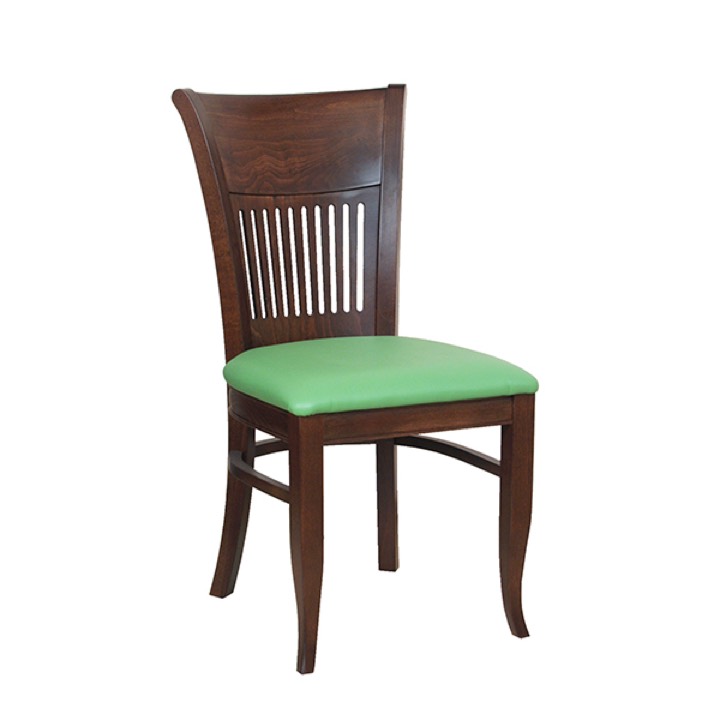
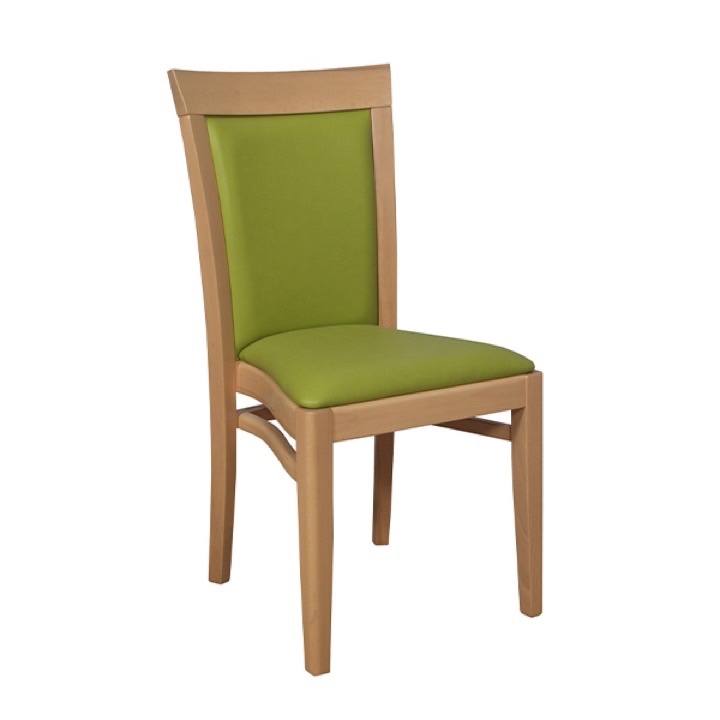
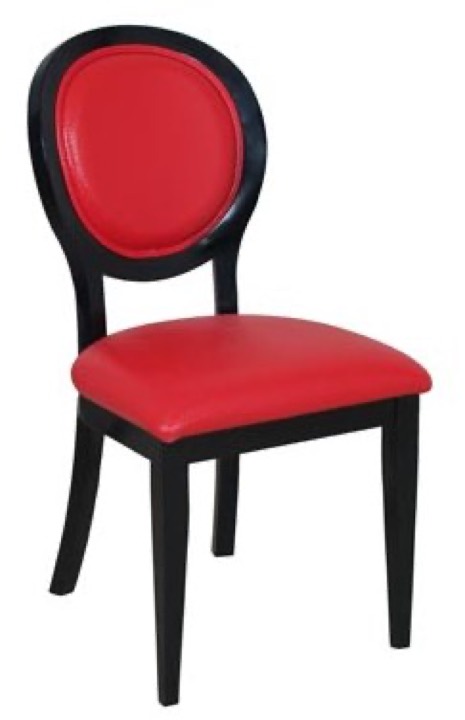
We make upholstered restaurant chairs and armchairs on solid-wood frames, with many fabric and faux leather options (source 2):
| Model | Seat height | Width | Seat depth | Note |
|---|---|---|---|---|
| Brita chair | 450 mm | 460 mm | 410 mm | Stacking |
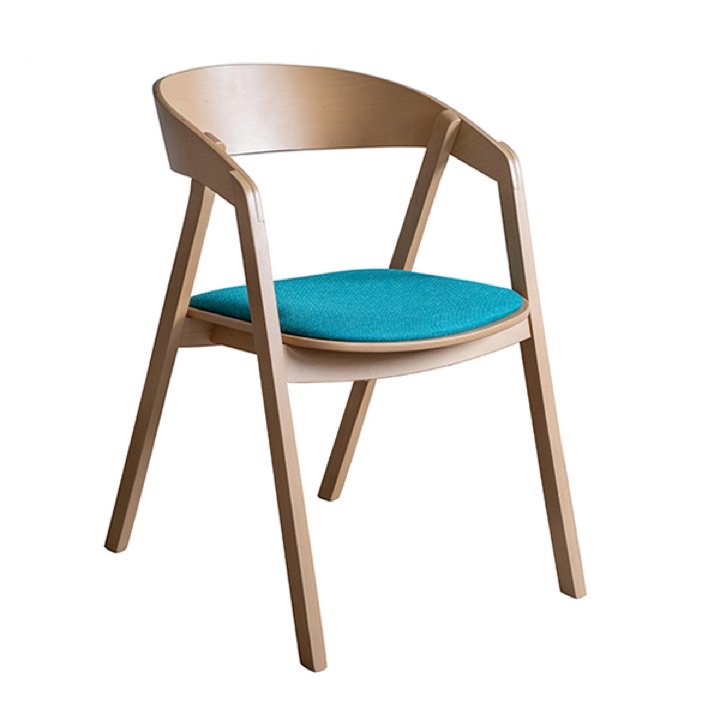
| Pony armchair | 450 mm | 540 mm | 460 mm | Stacking, beech or oak |
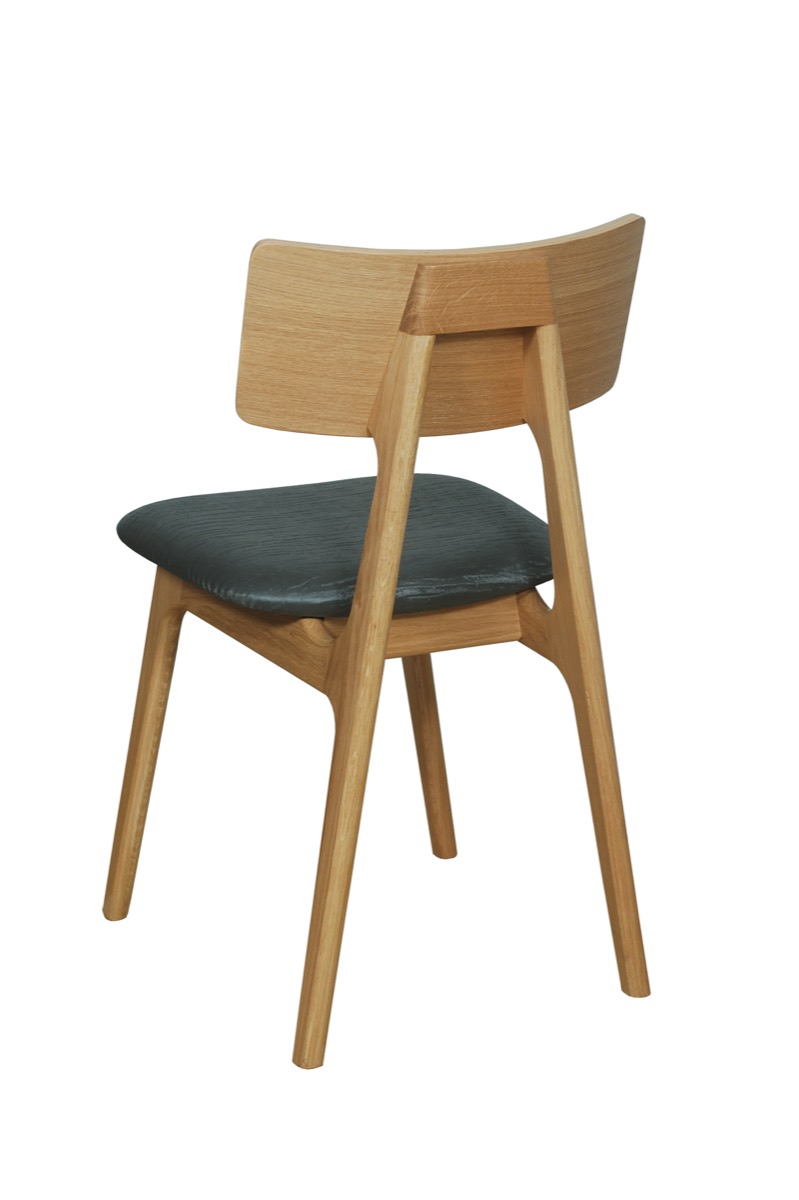
| Deya chair | 490 mm | 470 mm | 440 mm | Upholstered back |
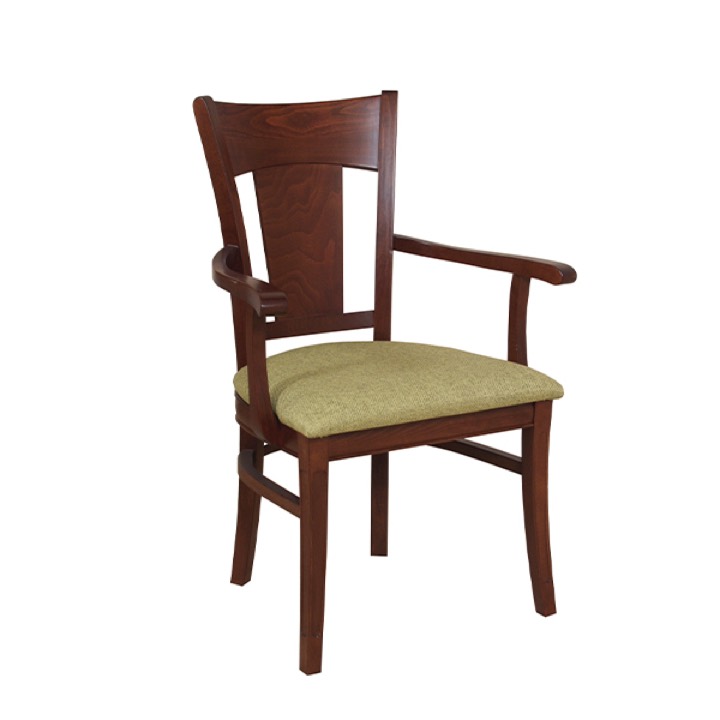
| Zafira armchair | 500 mm | 650 mm | 470 mm | Generous armchair |
Every model comes in our 10 frame finishes, from natural beech to wenge.
We offer these chairs to restaurant and hotel owners, interior designers, furniture retailers and importers, event rental companies and care homes, and we are looking for long-term partners in each of these groups.
Sources
- PMQ Pizza Magazine, Thirty-seven percent of diners say restaurant furnishings impact eating-out decisions (Telescope Casual National Shopper Survey by WSL Strategic Retail, 2009): https://www.pmq.com/thirty-seven-percent-of-diners-say-restaurants-furnishings-impact-eating-out-decisions/
- RikoStyle product data as published on rikostyle.com, November 2026. Medians of our dining chairs and armchairs.
- Blackler A. et al., Seating in aged care: physical fit, independence and comfort, SAGE Open Medicine (2018): https://pmc.ncbi.nlm.nih.gov/articles/PMC5758957/