






















Buyer guides
Dementia-friendly chairs: how colour, contrast and shape help residents sit down safely
Older eyes need about three times more contrast to find objects. How to choose chairs that residents with dementia can see, trust and get out of on their own, with practical rules from health and care guidance.
The problem
A resident walks into the lounge and stops. She can't tell where the chair ends and the floor begins. She hesitates, reaches for the wrong edge and sits down badly. Or she doesn't sit down at all.
For people living with dementia, a chair that "blends in" is not elegant. It is a risk.
Why contrast matters so much
The Victorian Department of Health in Australia puts it in one line: "Older people need about three times as much contrast as younger people to find objects." People with dementia often see contrast even less well (source 1).
That is why care guidance keeps repeating the same advice:
- Furniture should be "colour contrasted against walls for easy visibility" (source 1).
- "Walls should contrast with floors" (source 2).
- "A brightly coloured cushion on an armchair will increase the contrast between the chair, floor and wall" (source 2).
Colour: plain, strong and well placed
- Contrast the frame with the floor. On a light wood or vinyl floor, choose a darker frame. On a dark floor, a light frame.
- Contrast the seat with the frame. A seat in a strong colour shows the resident exactly where to sit.
- Use plain colours, not patterns. Social Care Wales warns that "patterned furniture... can disorient and confuse someone with dementia" and suggests block colours instead (source 2). Patterns can be misread: circles "may appear as piles of sand, pools of water or holes" (source 1).
- Use red where it matters most. Social Care Wales notes that "red is best, as older eyes see it most clearly" (source 2).
Shape: upright, with arms
Colour helps residents find the chair. Shape helps them use it.
- Upright chairs. "Upright chairs can be provided for people who have trouble getting in and out of lounge chairs unassisted" (source 1).
- Armrests. In a care-home study, armrests were essential for getting in and out. Armrests about 250 mm above the seat that reach the front edge help most (source 3). Our care home chairs guide explains the measurements.
- Comfort and familiarity. "Chairs must be chosen for comfort and familiarity, not just strength and serviceability" (source 1). A chair that looks like a chair from home is easier to trust.
A quick checklist
- Stand at the door and look at the room. Can you see every chair at once?
- Is each chair a different shade from the floor and the wall behind it?
- Is the seat a plain, strong colour?
- Does the chair have arms that reach the front of the seat?
- Can a resident get up from it without help? Try it with residents before you order.
Where RikoStyle fits
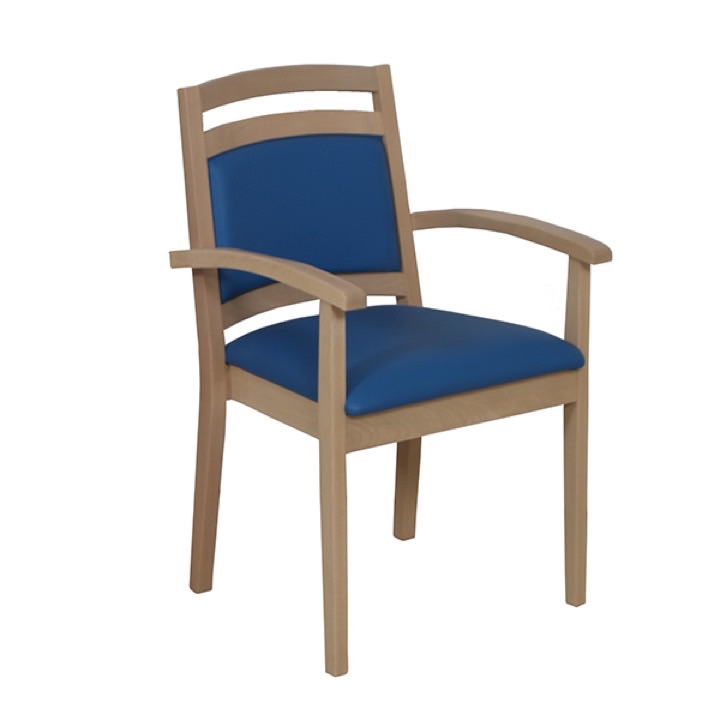
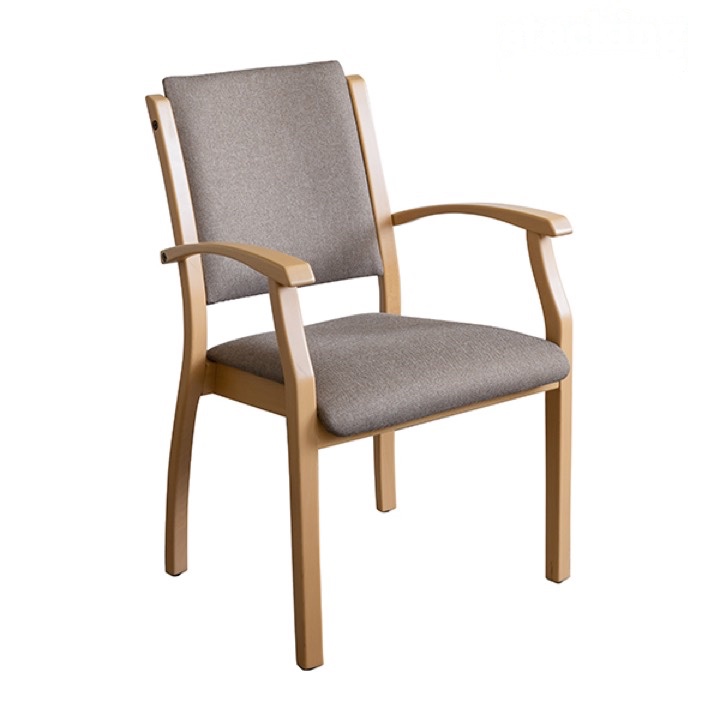
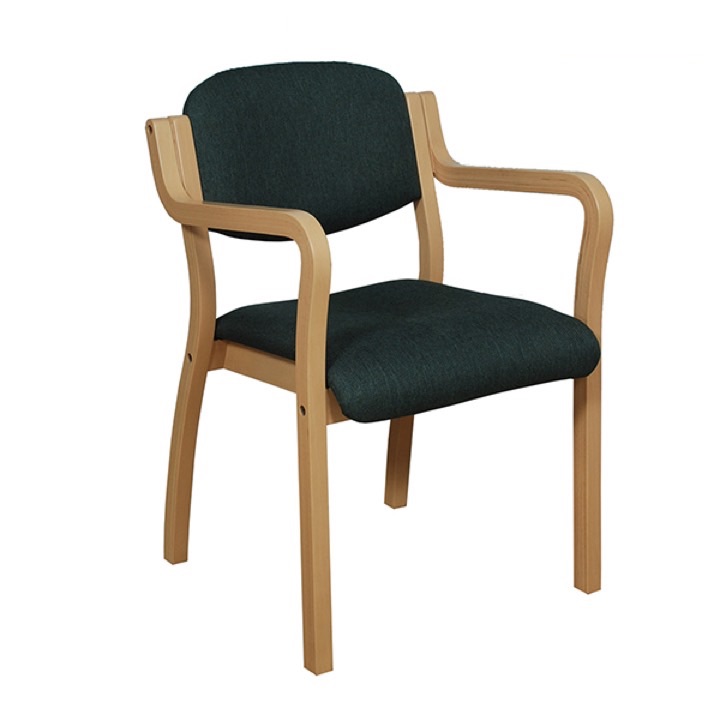
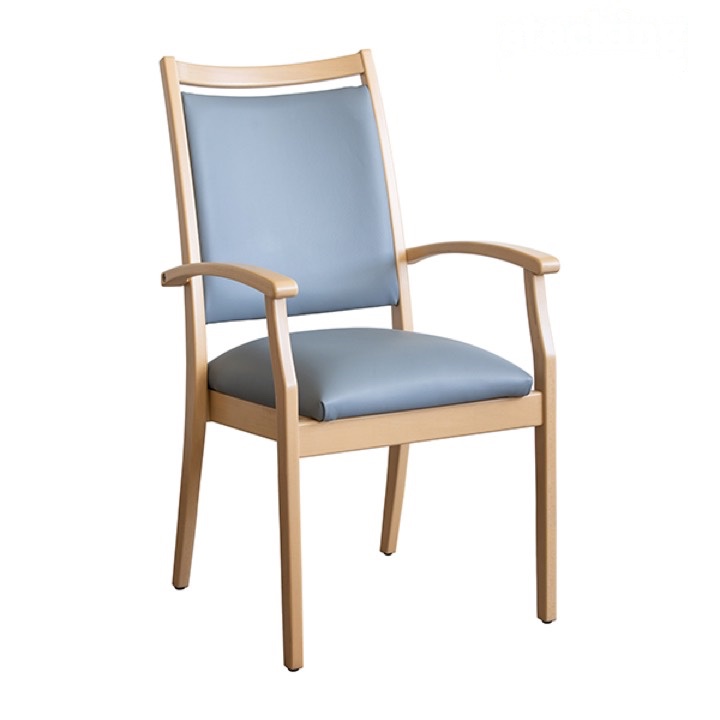
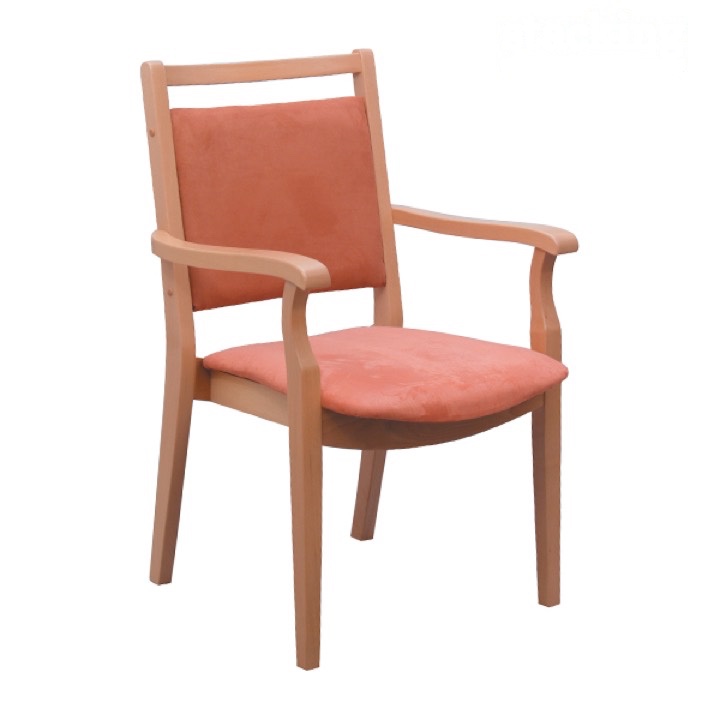
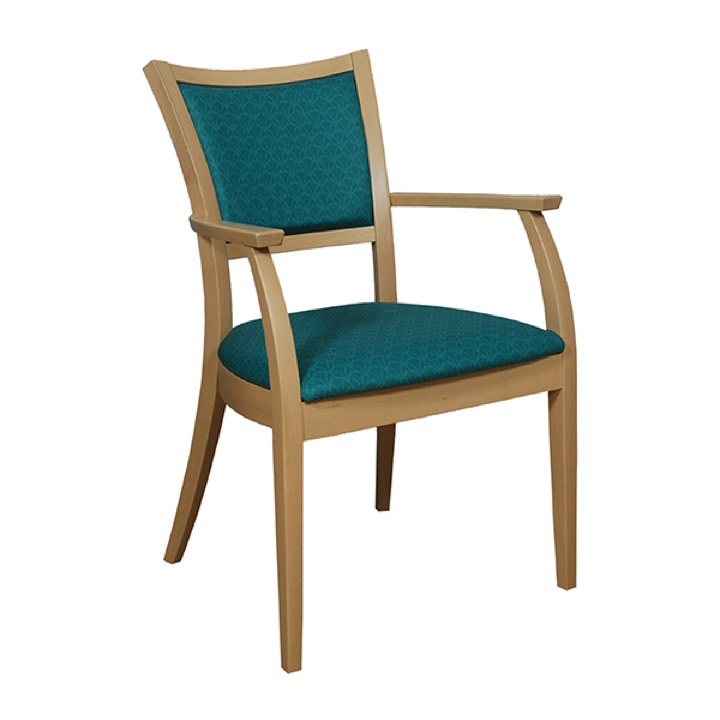
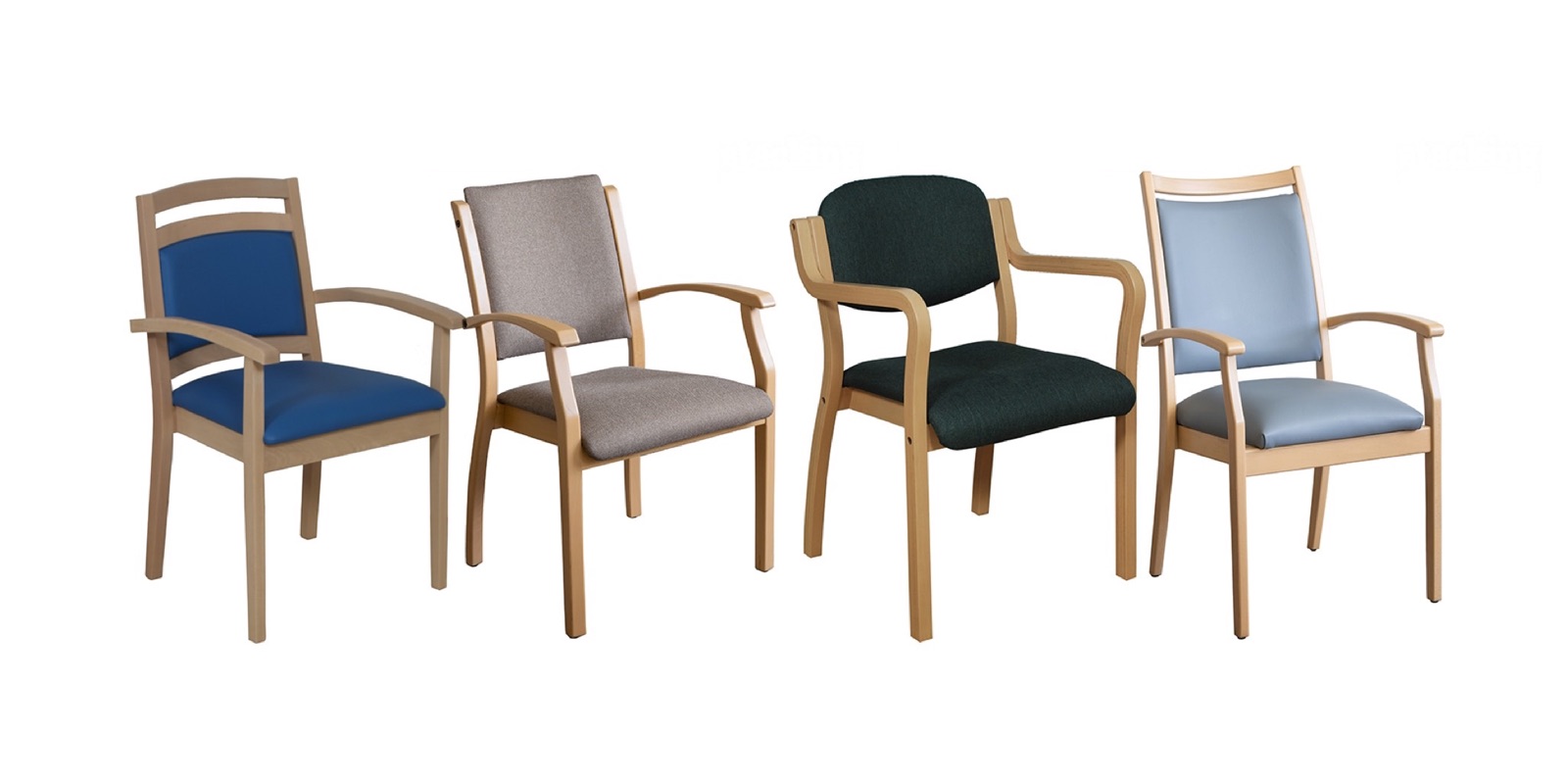
We make 51 chairs and armchairs for healthcare and care homes, on solid-wood frames. Two choices make contrast easy (source 4):
- The frame: 10 finishes, from White beech and Natural beech to Dark walnut and Wenge. Pick light or dark against your floor.
- The seat: faux leather in strong plain colours, including red, burgundy and blue, as well as calmer greys and creams.
| Model | Seat height | Seat depth | Arm height | Stacking |
|---|---|---|---|---|
| Akina armchair | 510 mm | 460 mm | 670 mm | Yes |
| Louise armchair | 480 mm | 480 mm | 660 mm | Yes |
| Fortuna 5 armchair | 490 mm | 440 mm | 690 mm | Yes |
| Wilma high armchair | 480 mm | 480 mm | 660 mm | Yes |
All 51 models are measured in one table on our care homes page.
We offer this range to care homes and their designers, furniture retailers and importers, hotel and restaurant owners, and event rental companies, and we are looking for long-term partners in each of these groups.
Sources
- Department of Health, Victoria (Australia), Dementia-friendly environments: interior design: https://health.vic.gov.au/dementia-friendly-environments/interior-design
- Social Care Wales, Dementia-friendly design: https://socialcare.wales/resources-guidance/improving-care-and-support/people-with-dementia/dementia-friendly-design
- Blackler A. et al., Seating in aged care: physical fit, independence and comfort, SAGE Open Medicine (2018): https://pmc.ncbi.nlm.nih.gov/articles/PMC5758957/
- RikoStyle product data as published on rikostyle.com, November 2026.